PQC is an Architectural Shift, Not an Algorithm Upgrade
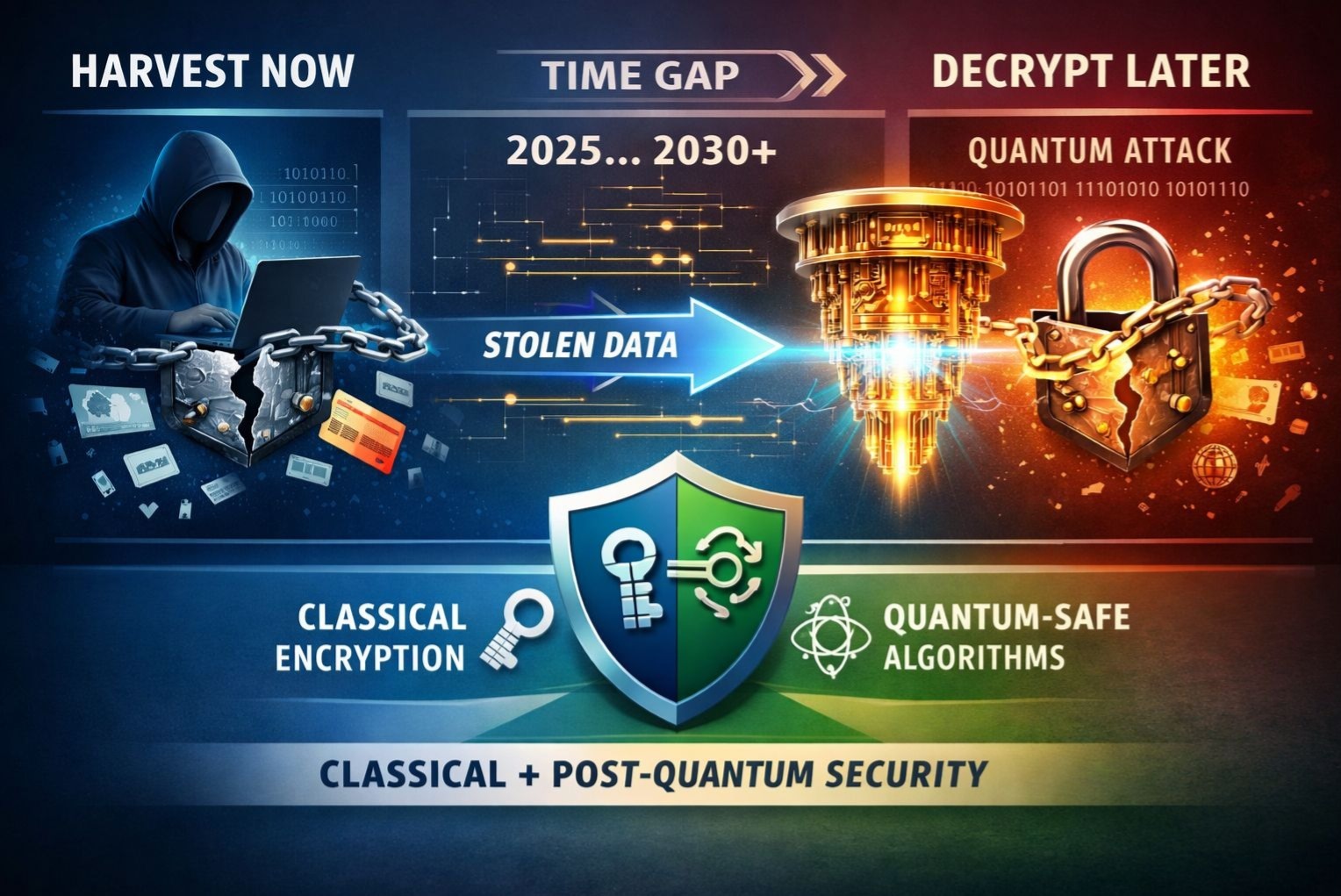
Most teams still treat the quantum threat as a 2030 problem. Attackers don’t.
The reality is Harvest Now, Decrypt Later—sensitive data stolen today can simply be stored and decrypted once quantum capability catches up. Recently, Google urged governments and critical infrastructure operators to accelerate Post-Quantum Cryptography (PQC) adoption. That warning hit close to home, because the risk isn’t theoretical anymore, especially for platforms handling long-lived financial identity and transaction data.
Beyond the Algorithm
Over the past months, I worked on upgrading a core financial trust platform to be PQC-ready. Not because compliance forced it, but because threat modeling made the timing hard to ignore. What quickly became clear is that PQC isn’t an algorithm upgrade. It’s an architectural one.
The work touched multiple layers of the infrastructure:
- Edge Routing: Ensuring encrypted traffic is protected even before hitting application infrastructure.
- Gateway Experimentation: Building a custom Nginx setup supporting hybrid TLS (X25519 + ML-KEM-768).
- Deep Platform Changes: Replacing parts of RSA/ECC usage inside the Java stack with ML-DSA and ML-KEM using Bouncy Castle.
The Real Challenge: Legacy Constraints
The hardest part wasn’t getting PQC working. It was making sure nothing broke.
Legacy banking apps, older clients, and strict integration constraints all still needed to behave exactly the same. That is where hybrid cryptography made the difference. By running classical and quantum-safe mechanisms side by side, it gave the platform room to evolve without forcing risky migration events.
Conclusion
Security upgrades should make systems stronger, not more fragile. PQC is slowly moving from a research curiosity into real architectural planning territory. The question is no longer if we migrate, but how we engineer the transition without disrupting the financial systems of today.